
Alaska’s Youth’s Fight For Climate Justice Could Not Be More Critical Than Now
By: Our Children’s Trust
For those who live in Alaska, there is a unique connection to place that might not exist elsewhere in the contiguous United States. Reliance on subsistence resources for hunting, fishing, and gathering of wild plants is commonplace and an appreciation for what the landscape has to offer for survival is unavoidable.
Alaska conjures thoughts of vast open landscapes, wild places, and wildlife. But what is abundantly clear to those who live in Alaska, that might not be as visible to a visitor, is that Alaska is particularly vulnerable to the impacts of climate change. It is warming four times faster than the global average—causing heatwaves the state has never seen in recent history. Permafrost—underlying more than 80% of the state—is thawing, which causes critical infrastructure to fail, homes to sink, and increases the frequency and magnitude of landslides, erosion, and dangerous storm surges. Migration patterns of animals needed for hunting are changing, seasonal harvests of plants and berries are decreasing, and ice cover needed to hunt marine life is more and more unpredictable, limiting access to critical subsistence resources. Severe storms are becoming more frequent and just this summer the impact of these storms was front and center.
On October 12, 2025, climate change induced Typhoon Halong hit the west coast of Alaska, with major damage in the communities of Kipnuk, Kwigillingok, and Napakiak. These communities are remote and isolated, with no roads in or out. Halong brought devasting winds and flooding, which caused homes to float away and completely wiped out the communities’ infrastructure. Kipnuk and Kwigillingnok had to evacuate, which meant waiting for military planes to take them to another small community of Bethel and then many travelled on to Anchorage, bringing with them only what they could carry and forcing them to say goodbye to the communities they call home.
Typhoon Halong provides the dramatic reality that climate change in Alaska is not just minor changes to the environment, it means impacts to culture, identity, access to subsistence resources that many Alaskans, including Alaska Natives, depend upon, and a changing sense of place.
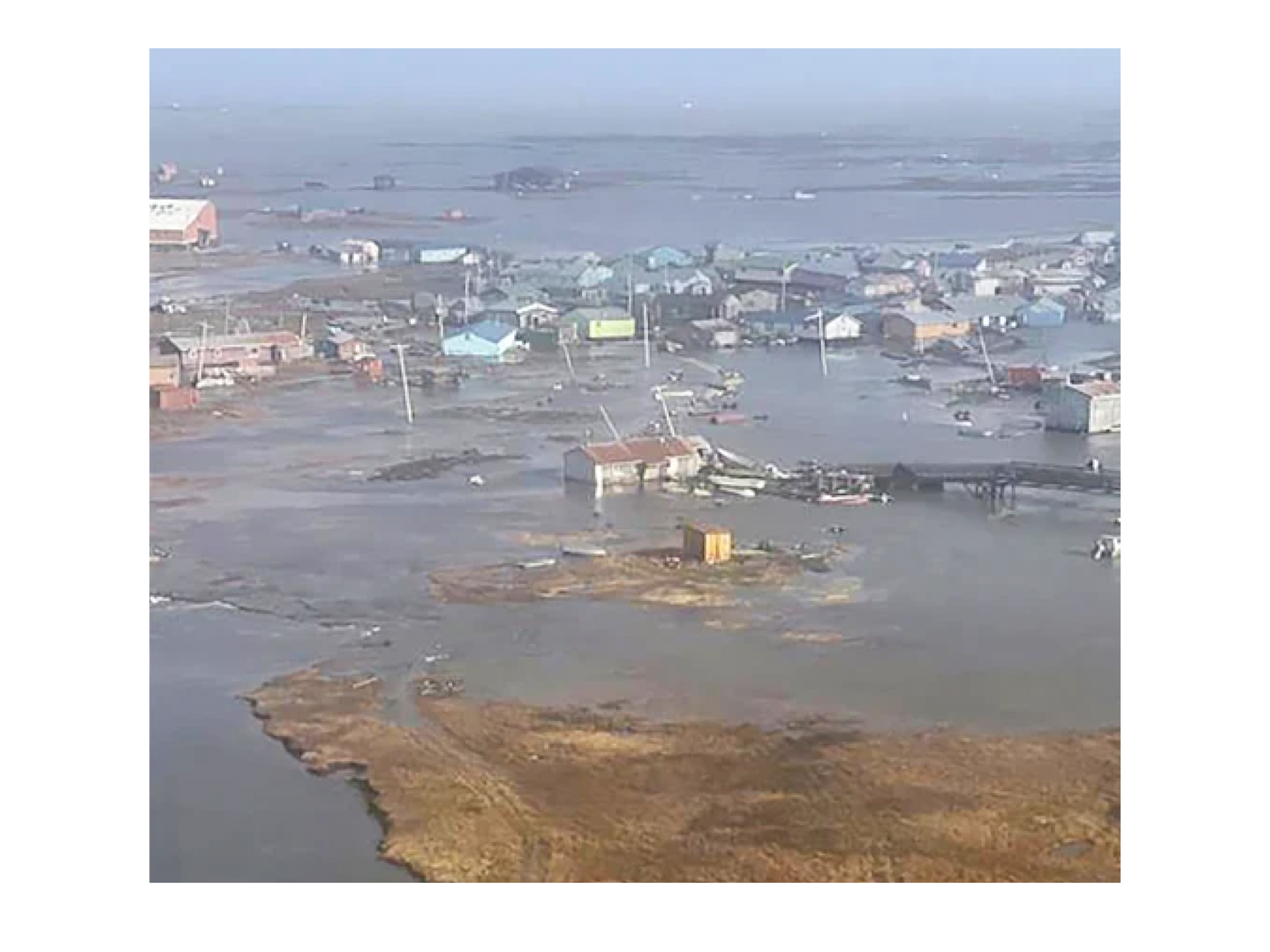
Aerial photo of Kipnuk on October 12, 2025 Credit: Associated Press
Even while the climate impacts to Alaska cannot be ignored, the State continues to implement laws and policies to further promote oil and gas development within the State, which results in further climate pollution that exacerbates climate change. Every additional increment of climate pollution matters. However, eight youth in Alaska are not giving up and are motivated to hold their government accountable. The youth, including four Alaska Natives, are from across Alaska including one plaintiff from the town of Kipnuk who experienced her town’s devastation when Halong hit, have filed a lawsuit against the State and the Alaska Gasline and Development Corporation (AGDC). The youth are challenging the constitutionality of Alaska laws that mandate the Alaska LNG Project, one of the largest infrastructure projects ever proposed in the U.S., involving development and extraction of gas on the north slope, construction of an 800-mile pipeline across the State, including portions of Denali National Park, over permafrost, which is rapidly thawing and shifting due to climate change, and ending in south central Alaska where the majority of the gas will be liquified and exported to other countries.
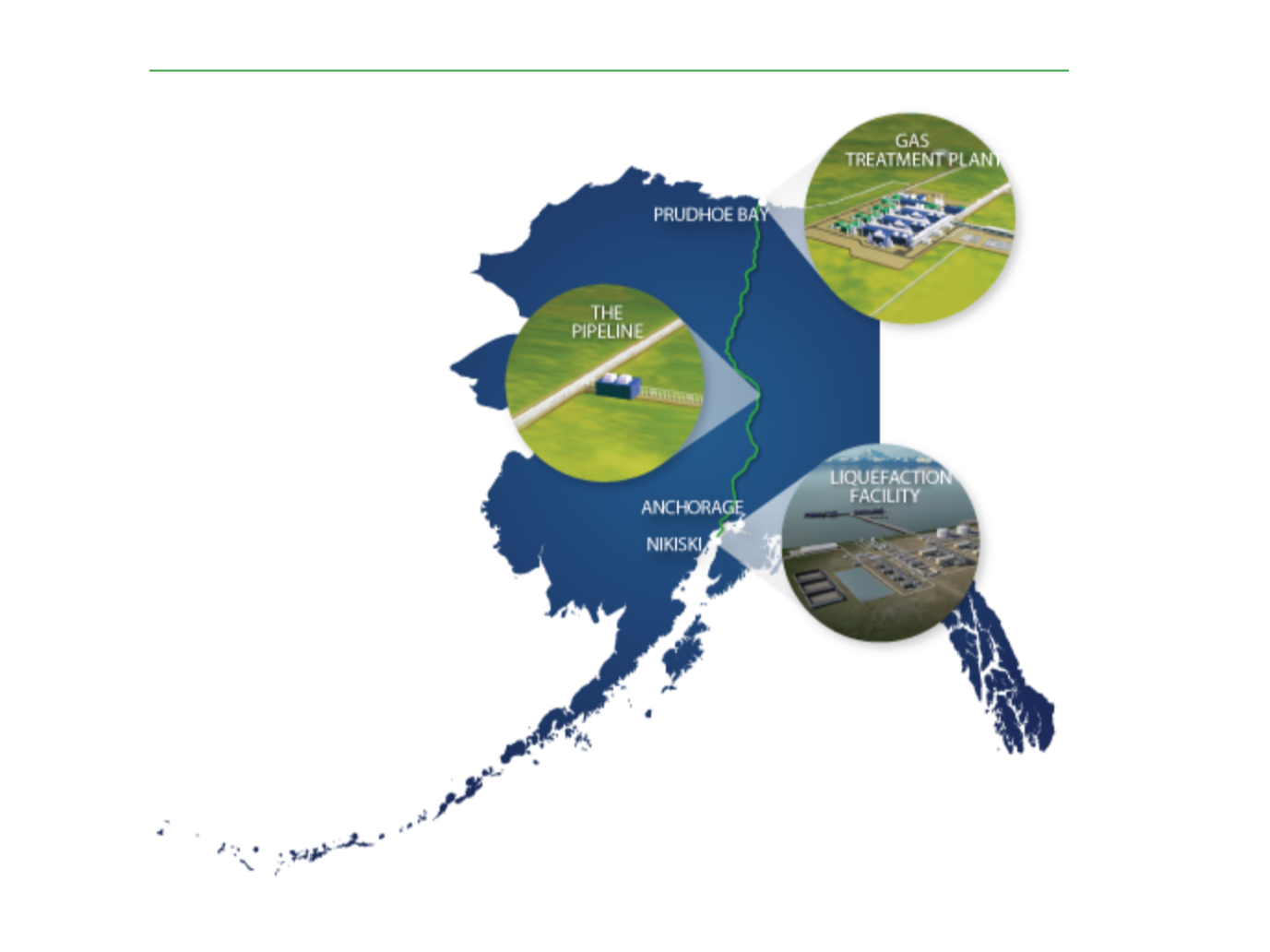
Image taken from AGDC’s website: https://agdc.us/alaskas-lng-project/project-overview/)
The State has secured the permits and licenses necessary for the construction and operation of the Project, and it claims that private investors are ready to make a final investment decision by the end of 2025, with the total project cost estimated somewhere between $50 and $60 billion.
The Project, if built, would triple Alaska’s greenhouse gas emissions and is being implemented at a time when the scientific consensus requires that climate pollution must be rapidly reduced to avert further irreversible climate harms. Importantly, non-fossil fuel-based energy systems across all sectors, including electricity generation, are economically feasible and technologically available to employ in Alaska, including to replace coal, gas, and oil, making new fossil fuel infrastructure, like the Alaska LNG Project that increase fossil fuel dependence unnecessary.
The youth bring their claims grounded in the public trust doctrine, which provides that Alaska’s government holds certain natural resources in trust for public use and owes a fiduciary duty to manage those resources for the common good of the public as a beneficiary of the trust. The public trust doctrine in Alaska is constitutionalized under Article VIII of Alaska’s Constitution. Public trust resources protected include fish, wildlife, waters, forests, grasslands, and all other replenishable resources, which must include the air and the atmosphere because they are intertwined with the health of all other public trust resources.
Specifically, the youth have brought three claims under the Alaska Constitution:
(1) Violation of Article VIII, sections 3, 15, and 17, which guarantee that all Alaskans equally have access to Alaska’s public trust resources and prohibit the State from discriminating against certain user groups. In advancing and developing the Alaska LNG Project the State is discriminating against youth and future generations, including the youth plaintiffs in this case, because the Project would substantially increase Alaska’s climate pollution, exacerbating the harms these youth are already experiencing and limiting their access to the public trust resources upon which they depend as compared to present and past generations.
(2) Violation of Article VIII, section 4, which requires that the State maintain public trust resources in perpetuity for present and future generations for sustainable yield. In advancing and developing the Alaska LNG Project, the State is violating those duties because the Project would substantially increase Alaska’s climate pollution, resulting in devasting impacts to the atmosphere, waters, fisheries, wildlife and other public trust resources and impairing the sustainable yield of those resources.
(3) Article VIII and Article I, section 7 guarantee the right to a climate system that sustains human life, liberty, and dignity as a fundamental right. The right to a climate system that sustains human life, liberty, and dignity is necessary for sustainable yield, continuing access to, and continuing availability of Alaska’s public trust resources as necessary to provide for the youth’s basic human needs, including sufficient access to clean air, water, shelter and food. In advancing and developing the Alaska LNG Project, the State is violating the youth’s fundamental rights as the Project will substantially increase Alaska’s climate pollution thereby exacerbating the climate impacts the youth are already experiencing.
The youth are seeking a declaration from Alaska’s courts that the laws mandating the Alaska LNG Project violate their rights under Article VIII, sections 3, 4, 15, and 17 and Article I, section 7 and requesting an injunction to stop the State from taking any further actions to advance or develop any part of the Alaska LNG Project. These youth are standing up to protect their rights and their future and represent democracy in action. They are asking the court to fulfill its duty to interpret and apply the constitution and to supply a check on the other branches of government to ensure they are acting within the constitution’s parameters.
To follow these youth’s journey through the court system, the timeline and progress of the case is updated here.